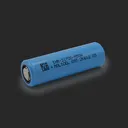
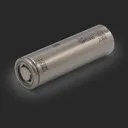
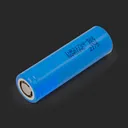
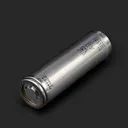
Official Batemo Page
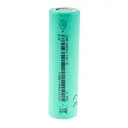
Manufacturer Page<p>Get everything you need for the lithium-ion battery cell EVE Energy INR21700-50E: Extensive measurement data in the total operation regime, a high-precision, physical battery model with global validity, and a teardown report that contains all details about materials and microstructures.</p>
<table>
<colgroup>
<col width="50%">
<col width="50%"> </colgroup>
<tbody>
<tr>
<td>Cell Origin</td>
<td style="text-align:right">purchased on free market</td>
</tr>
<tr>
<td>Cell Format</td>
<td style="text-align:right">21700</td>
</tr>
<tr>
<td>Dimensions</td>
<td style="text-align:right">21.1 x 70.2 mm</td>
</tr>
<tr>
<td>Weight</td>
<td style="text-align:right">68.1 g</td>
</tr>
<tr>
<td>Capacity<br>
<span class="collapseomatic noarrow" id="id699f67db613f6" tabindex="0" alt="definition" title="definition">definition</span><span id="swap-id699f67db613f6" alt="'close'" class="colomat-swap" style="display:none;">close</span><div id="target-id699f67db613f6" class="collapseomatic_content collapsible_orange">
The nominal capacity originates from the manufacturer’s data sheet, if available. When the data sheet is unavailable, the nominal capacity is estimated. Batemo measured the C/10 capacity by discharging the cell at an ambient temperature of 25°C from 100% with a constant current of 0.5A (0.1C) until reaching the voltage of 2.5V. The thermal boundary condition is free convection.<br>
</div></td>
<td style="text-align:right">
<span style="font-size: 10px">nominal</span> 5 Ah<br>
<span style="font-size: 10px">C/10</span> 4.9 Ah</td>
</tr>
<tr>
<td>Current<br>
<span class="collapseomatic noarrow" id="id699f67db61485" tabindex="0" alt="definition" title="definition">definition</span><span id="swap-id699f67db61485" alt="'close'" class="colomat-swap" style="display:none;">close</span><div id="target-id699f67db61485" class="collapseomatic_content collapsible_orange">
All quantities are measurement results from the Batemo battery laboratory.<br> The continuous current is the highest current that completely discharges the cell without overheating it. Therefore, the cell is discharged from 100% state of charge (SOC) at an ambient temperature of 25°C with a constant current until a residual state of charge of 10% and either the lower voltage limit of 2.5V or 90% of the maximum surface temperature (63°C) is reached.<br> The peak current is the current that the cell can supply for 5 minutes. The cell is therefore discharged from 100% SOC at an ambient temperature of 25°C with a constant current until it reaches either the lower voltage limit of 2.5V or the maximum surface temperature of 70°C after 5 minutes. For cells that reach the maximum surface temperature, the measured current is taken directly as the peak current. For cells that do not reach the maximum surface temperature after 5 minutes because they reach the lower voltage limit first, the measured current is multiplied by a correction factor that estimates the current that would have heated the cell to the maximum surface temperature within 5 minutes.<br> The thermal boundary condition is free convection. These operating conditions may be outside the cell manufacturer’s specification.<br>
</div></td>
<td style="text-align:right">
<span style="font-size: 10px">continuous</span> 10.1 A<br>
<span style="font-size: 10px">peak</span> 21.4 A</td>
</tr>
<tr>
<td>Energy<br>
<span class="collapseomatic noarrow" id="id699f67db614dd" tabindex="0" alt="definition" title="definition">definition</span><span id="swap-id699f67db614dd" alt="'close'" class="colomat-swap" style="display:none;">close</span><div id="target-id699f67db614dd" class="collapseomatic_content collapsible_orange">
Batemo measured the C/10 energy by discharging the cell at an ambient temperature of 25°C from 100% with a constant current of 0.5A (0.1C) until reaching the voltage of 2.5V. The thermal boundary condition is free convection.<br>
</div></td>
<td style="text-align:right">
<span style="font-size: 10px">C/10</span> 18.1 Wh</td>
</tr>
<tr>
<td>Power<br>
<span class="collapseomatic noarrow" id="id699f67db6152b" tabindex="0" alt="definition" title="definition">definition</span><span id="swap-id699f67db6152b" alt="'close'" class="colomat-swap" style="display:none;">close</span><div id="target-id699f67db6152b" class="collapseomatic_content collapsible_orange">
All quantities are measurement results from the Batemo battery laboratory.<br> The continuous power is the highest power that completely discharges the cell without overheating it. Therefore, the cell is discharged from 100% state of charge (SOC) at an ambient temperature of 25°C with a constant current until a residual state of charge of 10% and either the lower voltage limit of 2.5V or 90% of the maximum surface temperature ( 63°C) is reached.<br> The peak power is the power the cell can supply for 5 minutes. The cell is therefore discharged from 100% SOC at an ambient temperature of 25°C with a constant current until it reaches either the lower voltage limit of 2.5V or the maximum surface temperature of 70°C after 5 minutes. For cells that reach the maximum temperature limit, the measured power is directly taken as peak power. For cells that do not reach the maximum surface temperature after 5 minutes because they reach the lower voltage limit first, the measured power is multiplied by a correction factor that estimates the power that would have heated the cell to the maximum surface temperature within 5 minutes.<br> The thermal boundary condition is free convection. These operating conditions may be outside the cell manufacturer’s specification.<br>
</div></td>
<td style="text-align:right">
<span style="font-size: 10px">continuous</span> 34.7 W<br>
<span style="font-size: 10px">peak</span> 73.6 W</td>
</tr>
<tr>
<td>Energy Density<br>
<span class="collapseomatic noarrow" id="id699f67db61574" tabindex="0" alt="definition" title="definition">definition</span><span id="swap-id699f67db61574" alt="'close'" class="colomat-swap" style="display:none;">close</span><div id="target-id699f67db61574" class="collapseomatic_content collapsible_orange">
The energy densities result from the C/10 energy, the cell weight and the cell volume.<br>
</div></td>
<td style="text-align:right">
<span style="font-size: 10px">gravimetric</span> 266 Wh/kg<br>
<span style="font-size: 10px">volumetric</span> 739 Wh/l</td>
</tr>
<tr>
<td>Power Density<br>
<span class="collapseomatic noarrow" id="id699f67db615bc" tabindex="0" alt="definition" title="definition">definition</span><span id="swap-id699f67db615bc" alt="'close'" class="colomat-swap" style="display:none;">close</span><div id="target-id699f67db615bc" class="collapseomatic_content collapsible_orange">
The power densities result from the peak power, the cell weight and the cell volume.<br>
</div></td>
<td style="text-align:right">
<span style="font-size: 10px">gravimetric</span> 1.08 kW/kg<br>
<span style="font-size: 10px">volumetric</span> 3 kW/l</td>
</tr>
</tbody>
</table>