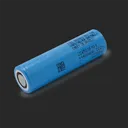
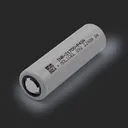
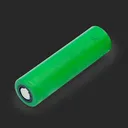
Murata US21700-VTC6A

High-drain 21700 cell from Murata (formerly Sony). 4000mAh capacity with 40A continuous discharge (30A without temperature cutoff). Murata's flagship 21700 power cell offering excellent discharge capability in the larger form factor. Competes with the Molicel P42A in the high-power 21700 segment.

In brief: 21700 Li-ion battery cell. 4000mAh capacity. 20A continuous discharge. From $8.

Specifications

Cell Specs

Form Factor
21700
Chemistry
Li-ion
Capacity
4000mAh
Continuous Discharge
20.00A
Peak Discharge
40.00A

Physical

Weight
73 g
Dimensions (L×W×H)
70mm × 21mm × 21mm

Resources

Official Batemo Page

Manufacturer Page<p>Get everything you need for the lithium-ion battery cell muRata US21700-VTC6A: Extensive measurement data in the total operation regime, a high-precision, physical battery model with global validity, and a teardown report that contains all details about materials and microstructures.</p> <table> <colgroup> <col width="50%"> <col width="50%"> </colgroup> <tbody> <tr> <td>Cell Origin</td> <td style="text-align:right">purchased on free market</td> </tr> <tr> <td>Cell Format</td> <td style="text-align:right">21700</td> </tr> <tr> <td>Dimen­sions</td> <td style="text-align:right">21.3 x 69.9&nbsp;mm</td> </tr> <tr> <td>Weight</td> <td style="text-align:right">73.1 g</td> </tr> <tr> <td>Capacity<br> <span class="collapseomatic noarrow" id="id699f793e6bb9a" tabindex="0" alt="definition" title="definition">defin­i­tion</span><span id="swap-id699f793e6bb9a" alt="'close'" class="colomat-swap" style="display:none;">close</span><div id="target-id699f793e6bb9a" class="collapseomatic_content collapsible_orange"> The nominal capacity origi­nates from the manufac­tur­er’s data sheet, if avail­able. When the data sheet is unavail­able, the nominal capacity is estimated. Batemo measured the C/10 capacity by discharging the cell at an ambient temper­a­ture of 25°C from 100% with a constant current of 0.40A (0.1C) until reaching the voltage of 2.5V. The thermal boundary condi­tion is free convection.<br> </div></td> <td style="text-align:right"> <span style="font-size: 10px">nominal</span>&nbsp;4.00 Ah<br> <span style="font-size: 10px">C/10</span>&nbsp;3.76 Ah</td> </tr> <tr> <td>Current<br> <span class="collapseomatic noarrow" id="id699f793e6bc5a" tabindex="0" alt="definition" title="definition">defin­i­tion</span><span id="swap-id699f793e6bc5a" alt="'close'" class="colomat-swap" style="display:none;">close</span><div id="target-id699f793e6bc5a" class="collapseomatic_content collapsible_orange"> All quanti­ties are measure­ment results from the Batemo battery labora­tory.<br> The contin­uous current is the highest current that completely discharges the cell without overheating it. There­fore, the cell is discharged from 100% state of charge (SOC) at an ambient temper­a­ture of 25°C with a constant current until a residual state of charge of 10% and either the lower voltage limit of 2.5V or 90% of the maximum surface temper­a­ture (72°C) is reached.<br> The peak current is the current that the cell can supply for 5 minutes. The cell is there­fore discharged from 100% SOC at an ambient temper­a­ture of 25°C with a constant current until it reaches either the lower voltage limit of 2.5V or the maximum surface temper­a­ture of 80°C after 5 minutes. For cells that reach the maximum surface temper­a­ture, the measured current is taken directly as the peak current. For cells that do not reach the maximum surface temper­a­ture after 5 minutes because they reach the lower voltage limit first, the measured current is multi­plied by a correc­tion factor that estimates the current that would have heated the cell to the maximum surface temper­a­ture within 5 minutes.<br> The thermal boundary condi­tion is free convec­tion. These operating conditions may be outside the cell manufacturer’s specification.<br> </div></td> <td style="text-align:right"> <span style="font-size: 10px">contin­uous</span>&nbsp;20.2 A<br> <span style="font-size: 10px">peak</span>&nbsp;30.7 A</td> </tr> <tr> <td>Energy<br> <span class="collapseomatic noarrow" id="id699f793e6bcd6" tabindex="0" alt="definition" title="definition">defin­i­tion</span><span id="swap-id699f793e6bcd6" alt="'close'" class="colomat-swap" style="display:none;">close</span><div id="target-id699f793e6bcd6" class="collapseomatic_content collapsible_orange"> Batemo measured the C/10 energy by discharging the cell at an ambient temper­a­ture of 25°C from 100% with a constant current of 0.40A (0.1C) until reaching the voltage of 2.5V. The thermal boundary condi­tion is free convection.<br> </div></td> <td style="text-align:right"> <span style="font-size: 10px">C/10</span>&nbsp;13.7 Wh</td> </tr> <tr> <td>Power<br> <span class="collapseomatic noarrow" id="id699f793e6bd45" tabindex="0" alt="definition" title="definition">defin­i­tion</span><span id="swap-id699f793e6bd45" alt="'close'" class="colomat-swap" style="display:none;">close</span><div id="target-id699f793e6bd45" class="collapseomatic_content collapsible_orange"> All quanti­ties are measure­ment results from the Batemo battery labora­tory.<br> The contin­uous power is the highest power that completely discharges the cell without overheating it. There­fore, the cell is discharged from 100% state of charge (SOC) at an ambient temper­a­ture of 25°C with a constant current until a residual state of charge of 10% and either the lower voltage limit of 2.5V or 90% of the maximum surface temper­a­ture ( 72°C) is reached.<br> The peak power is the power the cell can supply for 5 minutes. The cell is there­fore discharged from 100% SOC at an ambient temper­a­ture of 25°C with a constant current until it reaches either the lower voltage limit of 2.5V or the maximum surface temper­a­ture of 80°C after 5 minutes. For cells that reach the maximum temper­a­ture limit, the measured power is directly taken as peak power. For cells that do not reach the maximum surface temper­a­ture after 5 minutes because they reach the lower voltage limit first, the measured power is multi­plied by a correc­tion factor that estimates the power that would have heated the cell to the maximum surface temper­a­ture within 5 minutes.<br> The thermal boundary condi­tion is free convec­tion. These operating conditions may be outside the cell manufacturer’s specification.<br> </div></td> <td style="text-align:right"> <span style="font-size: 10px">contin­uous</span>&nbsp;65.8 W<br> <span style="font-size: 10px">peak</span>&nbsp;106 W</td> </tr> <tr> <td>Energy Density<br> <span class="collapseomatic noarrow" id="id699f793e6bdae" tabindex="0" alt="definition" title="definition">defin­i­tion</span><span id="swap-id699f793e6bdae" alt="'close'" class="colomat-swap" style="display:none;">close</span><div id="target-id699f793e6bdae" class="collapseomatic_content collapsible_orange"> The energy densi­ties result from the C/10 energy, the cell weight and the cell volume.<br> </div></td> <td style="text-align:right"> <span style="font-size: 10px">gravi­metric</span>&nbsp;187 Wh/kg<br> <span style="font-size: 10px">volumetric</span>&nbsp;549 Wh/l</td> </tr> <tr> <td>Power Density<br> <span class="collapseomatic noarrow" id="id699f793e6be14" tabindex="0" alt="definition" title="definition">defin­i­tion</span><span id="swap-id699f793e6be14" alt="'close'" class="colomat-swap" style="display:none;">close</span><div id="target-id699f793e6be14" class="collapseomatic_content collapsible_orange"> The power densi­ties result from the peak power, the cell weight and the cell volume.<br> </div></td> <td style="text-align:right"> <span style="font-size: 10px">gravi­metric</span>&nbsp;1.45 kW/kg<br> <span style="font-size: 10px">volumetric</span>&nbsp;4.25 kW/l</td> </tr> </tbody> </table>

Frequently Asked Questions

We use cookies for analytics and to support affiliate links. Privacy Policy